And what café founders, D2C brands, and marketers are still getting wrong about bubble tea
If you think people are drinking bubble tea just because it’s “cute,” you’ve missed the entire point.
This isn’t just a drink with tapioca balls. This is identity in a cup — chewed slowly, documented obsessively, and consumed across generations trying to understand who they are.
Because bubble tea is doing something very few drinks in India are doing right now:
It’s giving people permission to play.

The Beverage That Broke Every Rule, and Won
Look closely: bubble tea doesn’t follow our traditional logic.
- It’s not hot.
- It’s not Ayurvedic.
- It doesn’t pretend to be ancient.
- It doesn’t come from “wellness” or “roots.”
And yet, it thrives.
Why? Because it hits a different nerve, the one that says, “Life is too heavy. Let me hold something light.”
In a country where the average Gen Z mind is dealing with overstimulation, career confusion, shrinking attention spans, and digital exhaustion, bubble tea isn’t just a drink. It’s relief disguised as novelty.
What Most Marketers Miss: This Is an Emotional Product
Let’s get something clear: people don’t come to bubble tea for hydration.
They come for affirmation.
- That their choice is different.
- That they’re still fun.
- That they’re part of something playful, global, and rebellious — without being loud about it.
Bubble tea taps into the limbic system — the part of the brain that governs emotion, memory, and motivation. That’s why people remember their first sip. They remember how it felt. Not how it tasted.
Visual Dopamine: How the Brain Reacts to Aesthetic Liquid
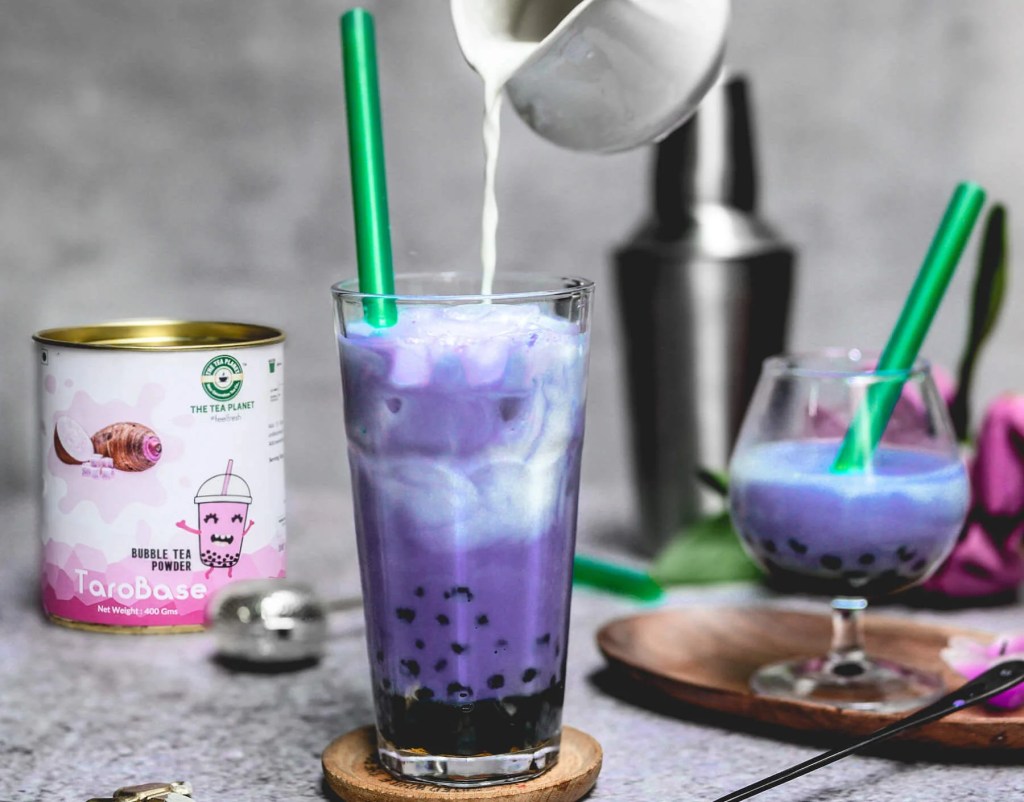
In consumer neuroscience, we now know that texture and movement in visuals activate higher levels of curiosity and attention. Think of what happens when you shake a bottle with pearls swirling inside — the brain registers reward in motion.
That’s why static coffee cups don’t generate the same level of digital engagement.
But bubble tea? With layers, pearls, foam, and syrup dripping down the glass — it’s engineered for scroll-stopping stimulus.
Successful brands understand this and treat each drink like a living sculpture.
That’s not “aesthetic.”
That’s strategy backed by psychology.
Limited Editions Are a Loyalty Test (Not a Marketing Trick)
In India, we often treat “limited editions” as discount excuses. But done right, they can create emotional rituals.
Bubble tea brands that win don’t just release new flavours, they create temporary belonging. The drink becomes a timestamp. A “you had to be there” experience.
Want a tip?
Next time you launch a special edition drink, ask yourself: What memory is this going to attach to?
- Mango Pearl for March nostalgia
- Rose Milk Foam for Raksha Bandhan
- Filter Coffee Bubble Tea as a South Indian identity bridge
Build drinks that mean something, not just taste different.
Packaging as a Mirror, Not a Container
The most ignored canvas in India’s café economy is packaging. Most bubble tea cups carry logos. Some carry QR codes. But few carry stories.
You want to win? Stop printing graphics. Start reflecting people.
- Use language that sounds like your audience, not your agency.
- Add micro-messages that make people smile privately.
- Let the cup talk back.
Every touchpoint should remind the consumer: “This brand sees me.”
The Tea Planet’s Edge: Why This Isn’t Just a Fad Here
At The Tea Planet, we’ve seen this trend evolve not just as manufacturers, but as memory-makers.
What we’ve learned:
- In Tier 2 cities, bubble tea is aspiration.
- In metros, it’s anxiety relief.
- Among school kids, it’s a secret ritual.
- Among office workers, it’s a quiet middle-finger to monotony.
And this is exactly why bubble tea is not a trend, it’s a container for culture.
When built right, it carries flavour and feeling in equal measure.
Final Reflection
The brands that will thrive in this category are not the ones that shout the loudest, but the ones that understand how to whisper something unforgettable.
Bubble tea isn’t about taste. It’s about timing.
It shows up when people are tired of being serious, scared of being judged, and hungry for something the world hasn’t already explained to them.
So here’s my question to you:
Are you selling tea, or are you selling trust?
Because people are chewing their way through more than tapioca.
They’re chewing through your values.
Your visual intelligence.
Your emotional intelligence.
If this made you rethink how you see beverages, branding, or belonging — I’d love to hear from you.
To explore more, visit www.theteaplanet.com


 Tea Travel Tales
Leave a comment